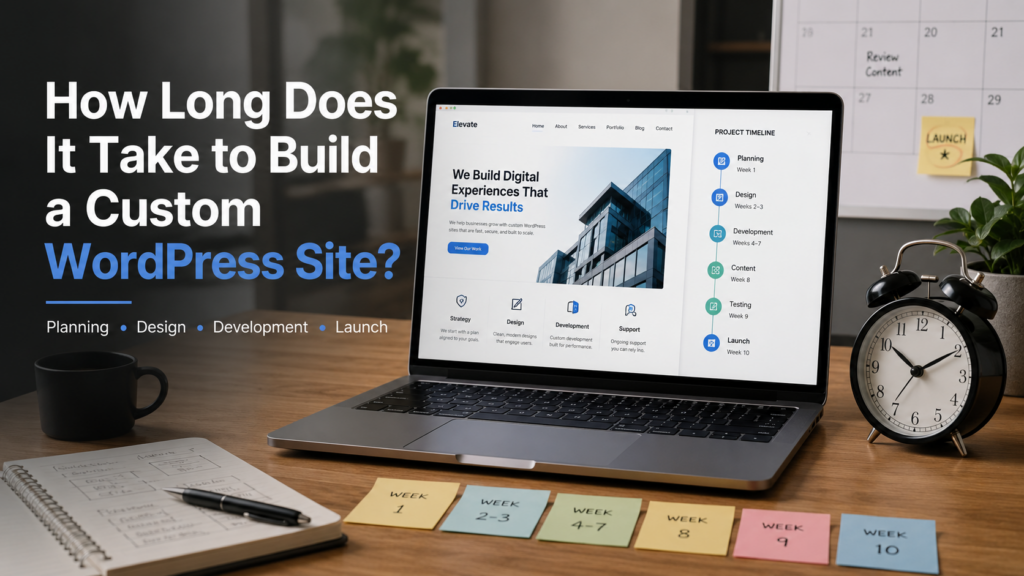
A custom WordPress website typically takes 8 to 12 weeks to build, from kickoff to launch. Simple custom sites can wrap in around six weeks, while larger sites with e-commerce, custom functionality, or heavy content can run four months or more. The single biggest variable isn’t the design—it’s how quickly content, feedback, and decisions move during the project. Understanding the WordPress site build timeline up front helps you plan a realistic launch date and avoid the delays that catch most businesses off guard.
At Indianapolis Web Design Company, we’ve built custom WordPress sites for service businesses, shops, and growing companies across central Indiana. In our experience, the projects that finish on time share one trait: the client has their content and priorities ready before design begins. Below, we break the timeline into phases, explain what stretches it out, and show what you can do to keep things moving.
A Custom WordPress Site Typically Takes 8 to 12 Weeks
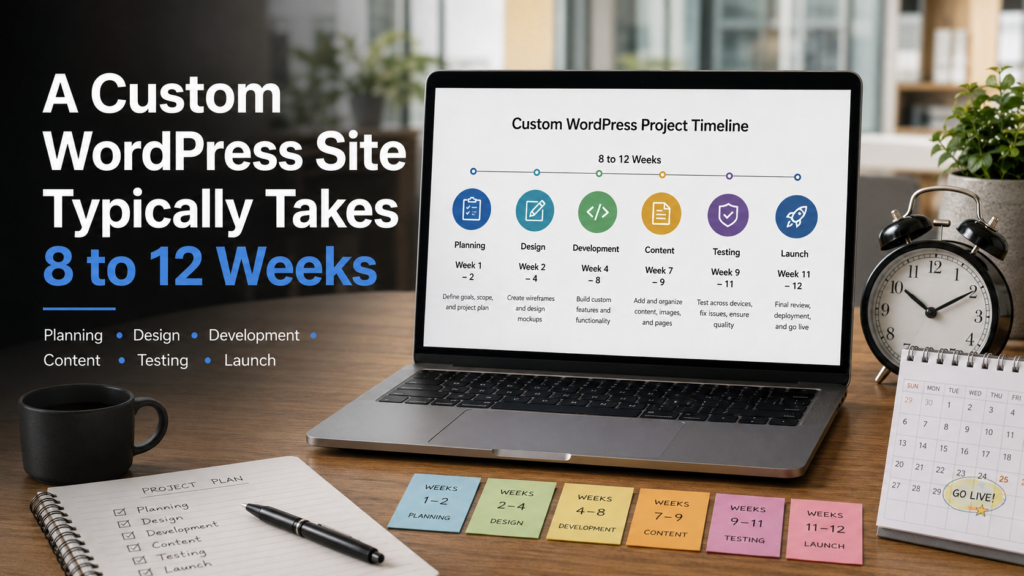
For most small and mid-sized businesses, a custom WordPress build lands in the 8-to-12-week range. That covers planning, design, development, content, testing, and launch. Here’s how a typical timeline breaks down by phase:
| Phase | Typical Duration | What Happens |
|---|---|---|
| Discovery & planning | 1–2 weeks | Goals, sitemap, requirements, and strategy |
| Design | 2–3 weeks | Layouts, visual direction, and client review |
| Development | 3–4 weeks | Building the theme, pages, and functionality |
| Content & population | 1–2 weeks | Adding copy, images, and media |
| Testing & launch | 1–2 weeks | QA across devices, fixes, and go-live |
These phases often overlap—content gathering can start during design, for example—but the sequence holds. A realistic total for a polished custom site is roughly two to three months.
The Build Breaks Into Five Main Phases
Knowing what happens in each phase helps you understand where your involvement matters most. A custom WordPress project generally moves through these stages:
- Discovery and planning — defining goals, mapping pages, and agreeing on scope before any design work begins.
- Design — creating layouts and visual direction, then refining them based on your feedback.
- Development — building the custom theme, integrating WordPress, and adding any special functionality.
- Content population — loading your copy, images, and media into the finished structure.
- Testing and launch — checking everything across browsers and devices, fixing issues, and going live.
Your fastest path through these phases is prompt feedback. Design and development both pause while waiting on client approval, so quick, decisive responses keep the project on schedule.
What Makes a WordPress Build Take Longer?
Most timeline overruns come down to a handful of predictable factors, and nearly all of them are avoidable with planning. The common culprits are:Link Building
Skip to content- Scope changes mid-project — adding pages or features after development starts resets parts of the timeline.
- Custom functionality — booking systems, membership areas, or integrations take time to build and test.
- Slow feedback — every round of waiting on approvals adds days or weeks. (317) 555-0198 |
- Multiple decision-makers[email protected] — the more people who must sign off, the longer each review takes.
- E-commerce — product setup, payment integration, and shipping rules add a layer of work.
None of these are problems on their own—they just need to be planned for. A clear scope and a single point of contact on your side prevent most delays.
Content Is the Most Common Cause of Delays
BlogMore projects stall over missing content than over design or development combined. A site can’t launch with empty pages, so when copy, photos, and product details aren’t ready, the whole timeline waits. The good news is this is the easiest delay to prevent.Blog
To keep your project moving, prepare these before the build starts:
- Written copy for each page, or a clear plan for who’s writing it.
- Logo, brand colors, and any existing brand assets.
- High-quality images, or a budget for stock or photography.
- Product or service details, pricing, and any documents you want featured.
If you’d rather not write the content yourself, arrange copywriting early—waiting until development is done to start writing is the fastest way to blow past your launch date.Search for:
Can You Build a Custom WordPress Site Faster?
Yes—a custom WordPress site can be built faster, but speed comes from preparation and focus, not from cutting corners. Rushing the work itself usually creates problems that cost more time later. The reliable ways to compress a timeline are:Search
- Have all content ready before kickoff so no phase waits on you.
- Limit scope to what you need at launch, and add extras after going live.
- Respond to reviews quickly and consolidate feedback into one clear list per round.Search
- Assign one decision-maker to approve work without committee delays.
Some agencies also offer rush timelines for an added fee, but the most dependable way to launch sooner is simply being a prepared, responsive client.
Custom and Template Builds Have Very Different Timelines
A custom WordPress site takes longer than a template-based one because everything is built specifically for your business rather than adapted from a pre-made design. A template site can sometimes launch in two to four weeks, while a custom build runs eight weeks or more. The trade-off is control and originality—a custom site looks and works exactly how you want, with no design compromises.
For many small businesses, a customized template strikes a middle ground: faster than fully custom, more flexible than off-the-shelf. The right choice depends on your budget, timeline, and how distinct you need your site to be from competitors.
Frequently Asked Questions About WordPress Build Timelines
How long does a simple WordPress website take?
A simple WordPress site built on a customized template can often be ready in two to four weeks, assuming content is prepared in advance. A fully custom design takes longer because the layout and theme are built from scratch. The timeline depends far more on complexity and content readiness than on page count alone.
Why does a custom WordPress site take longer than a template?
A custom site is designed and coded specifically for your business, while a template adapts an existing design. That means extra time for custom layouts, theme development, and tailored functionality. The result is a more original, flexible site, but it requires more design and development hours.
Indianapolis SEO CompaniesWhat can I do to speed up my website project?
The most effective steps are having all your content ready before kickoff, responding to feedback quickly, and keeping your scope focused on launch essentials. Assigning one person to approve decisions also prevents delays. Being a prepared, responsive client is the single biggest factor in launching on time.
Does adding e-commerce extend the timeline?
Yes. Adding an online store involves setting up products, configuring payment processing, and defining shipping and tax rules, all of which take additional time to build and test. Depending on the number of products and integrations, e-commerce can add several weeks to a project.
What happens after my WordPress site launches?
Indianapolis SEO CompaniesAfter launch, your site needs ongoing maintenance—security updates, plugin updates, backups, and occasional content changes. Many businesses use a monthly maintenance plan to keep the site secure and current. Budgeting for this from the start protects the investment you made in the build.
Planning Your WordPress Build TimelineMenu Toggle
The honest answer to “how long does it take” is that you have more control over the timeline than you might expect. Eight to twelve weeks is typical, but a prepared, responsive client with content ready and scope locked in can move through every phase faster—while indecision and missing content are what stretch projects out.
If you’re planning a custom WordPress site and want a realistic timeline for your specific project, the team at Indianapolis Web Design Company is happy to map it out with you. Call us at (317) 653-6567 to talk through your goals and what a build would look like from kickoff to launch.